

For the past two decades, UK insurers have fought to plug the steady drain on profits caused by Escape of Water (EOW) claims. Based on Go.Compare quote data, almost a third of home insurance quotes (29%) have an EOW claim in their history, more than even accidental damage at 26%.
I have contributed to those statistics. My own EOW claim did not involve a dramatic burst pipe. It was a slow leak under the floor, quietly causing damage for months before water finally started appearing on the surface. At first, I blamed the kids for spilling water and not cleaning up after themselves. Eventually, I had to admit that the puddle appearing inexactly the same spot every day was unlikely to be a coincidence and called my insurer.
The claims journey itself was abysmal and, unfortunately, an experience that many customers will recognise. The leak caused more damage than it should have, third‑party suppliers created additional issues, and by the time all the drying and reinstatement work was complete the overall cost was significant. The root cause was a poorly installed push‑fit joint on aplastic pipe to the shower. The joint had gradually loosened over time, turning a tiny seep into a meaningful leak.
Looking back, the whole thing should have been avoidable. A leak detection device or basic monitoring of my water usage by the water company who forced a water meter on me, should have flagged the problem much earlier. But the water company is not set up to be proactive, and my insurer is only set up to respond once things go visibly wrong. Not to support customers from losses that might develop into a large incidence in the first place.
My experience is not unusual. Modern builds tend to favour plastic pipes with push‑fit connectors over more expensive copper. Multiple joints are needed to feed today’s array of plumbed‑in appliances and underfloor heating. Much of this infrastructure is hidden behind walls or under floors, which can hide slow leaks for months. The result has been one of the most persistent drags on property underwriting profitability.
Some forward-thinking insurers, often those already strong on risk selection, have responded by partnering with leak detection providers and offering devices such as LeakBot to their home customers. Measuring the benefit of prevention is always tricky, because you are trying to quantify claims that never happened. But as adoption grows, there is at least a path to EOW being a more manageable risk rather than a constant surprise.
Which raises a question: once we finally get on top of EOW, what comes next? Could fire, and specifically fire involving solar installations, become the next significant property risk we wish we had addressed earlier?
Fire is a classic insurable risk: low frequency, high severity, and usually devastating to the individuals affected. Moral hazard is limited; people tend to go to reasonable lengths to avoid burning down their own property. That combination has underpinned fire insurance for centuries.
Historically, insurers have taken a very active interest in fire risk. The Great Fire of London led to the creation of the first UK insurance companies, who established their own fire brigades to protect their insured properties.
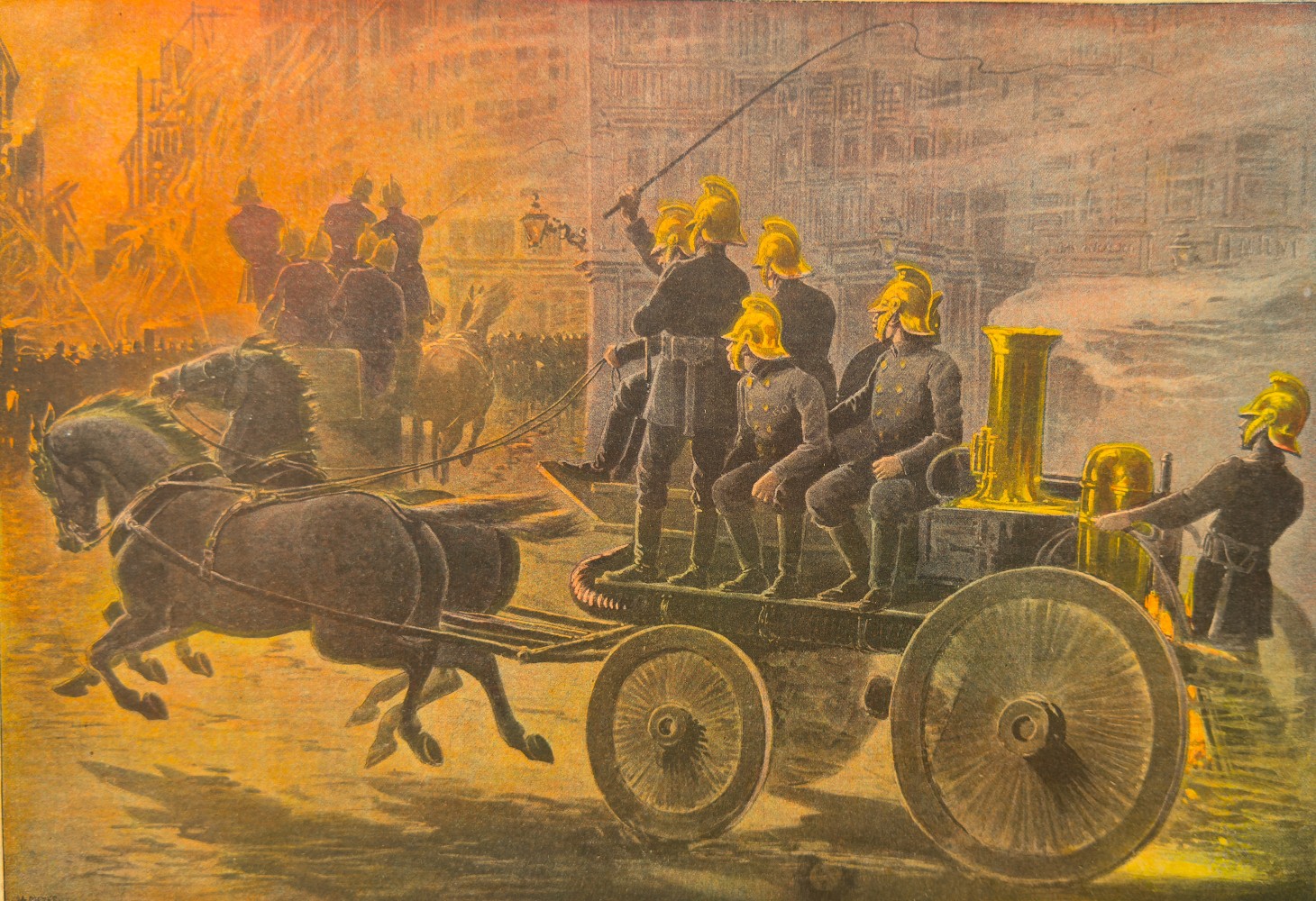
Over time, building regulations, better materials and the widespread use of smoke alarms have brought fire risk down to far more acceptable levels. In residential settings, the primary responsibility for prevention rests with the property owner, supported by regulation. In commercial properties, regular fire drills and risk assessments are part of the routine.
Against this backdrop, something new has been changing the risk profile of roofs in the UK: the rapid growth of solar panel and battery installations across the housing and commercial stock, driven by rising energy costs and the push for net‑zero / ESG targets have created a boom in domestic and commercial solar, with more than a million properties now carrying panels and installation rates continue to increase.
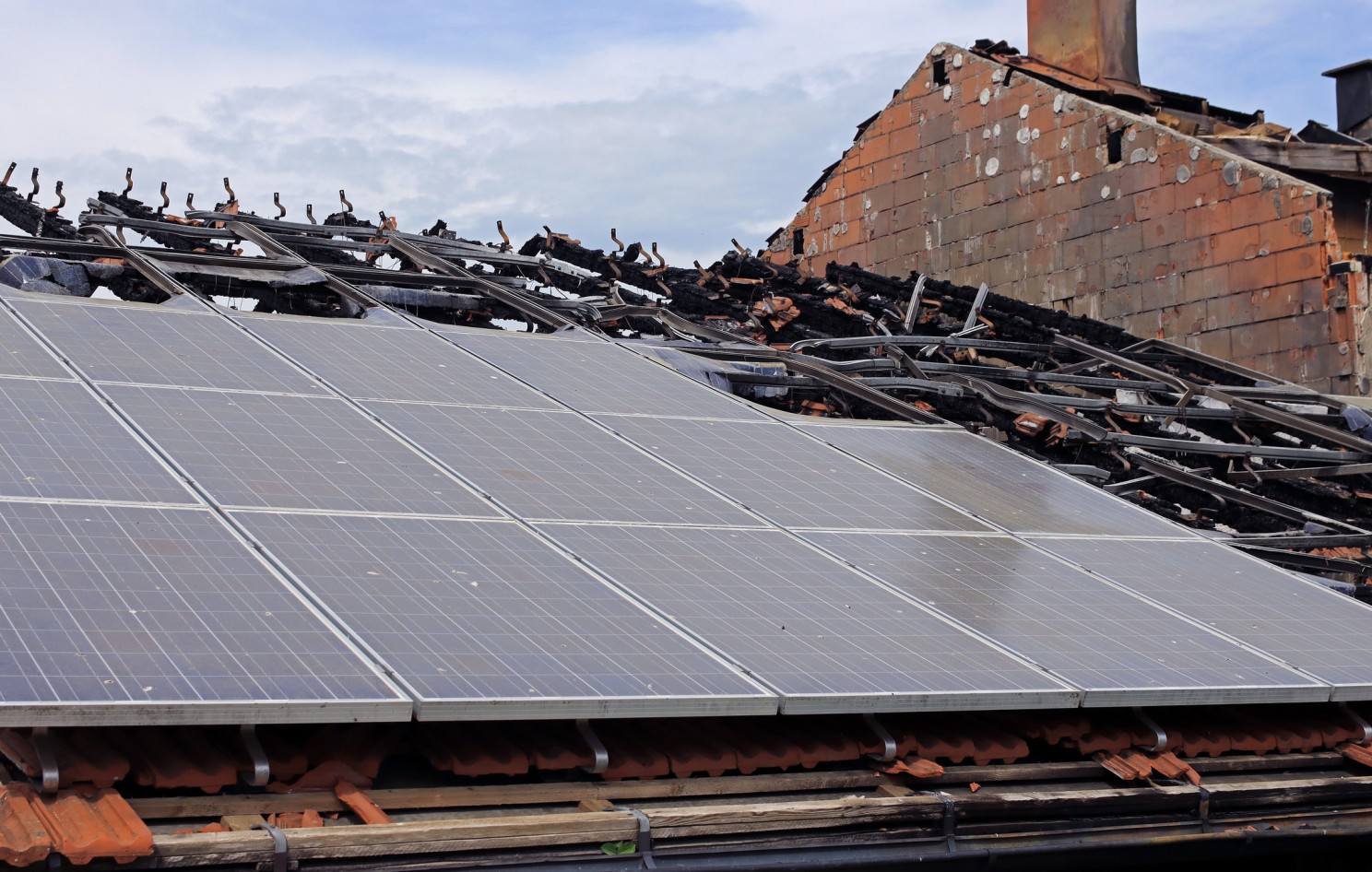
This is a positive development. However, as with any new technology deployed at scale, there are emerging risks that are not yet fully understood or consistently managed. Without controlled installation, regular servicing and maintenance, the probability of a fire originating in or around solar equipment increases… and a rooftop fire will quickly turn into a total loss.
Today, the number of solar‑related fires is still small as a proportion of all installations. Less than 0.01% by some estimates. But the trend is moving in the wrong direction. A 2025 report from QBE highlighted that between 2022 and 2024, the UK fire services saw around a 60%increase in fires involving solar panels, alongside approximately a 30%increase in the number of panels installed. AXA has issued similar warnings, backed by its own claims experience and issuing customer guidance.
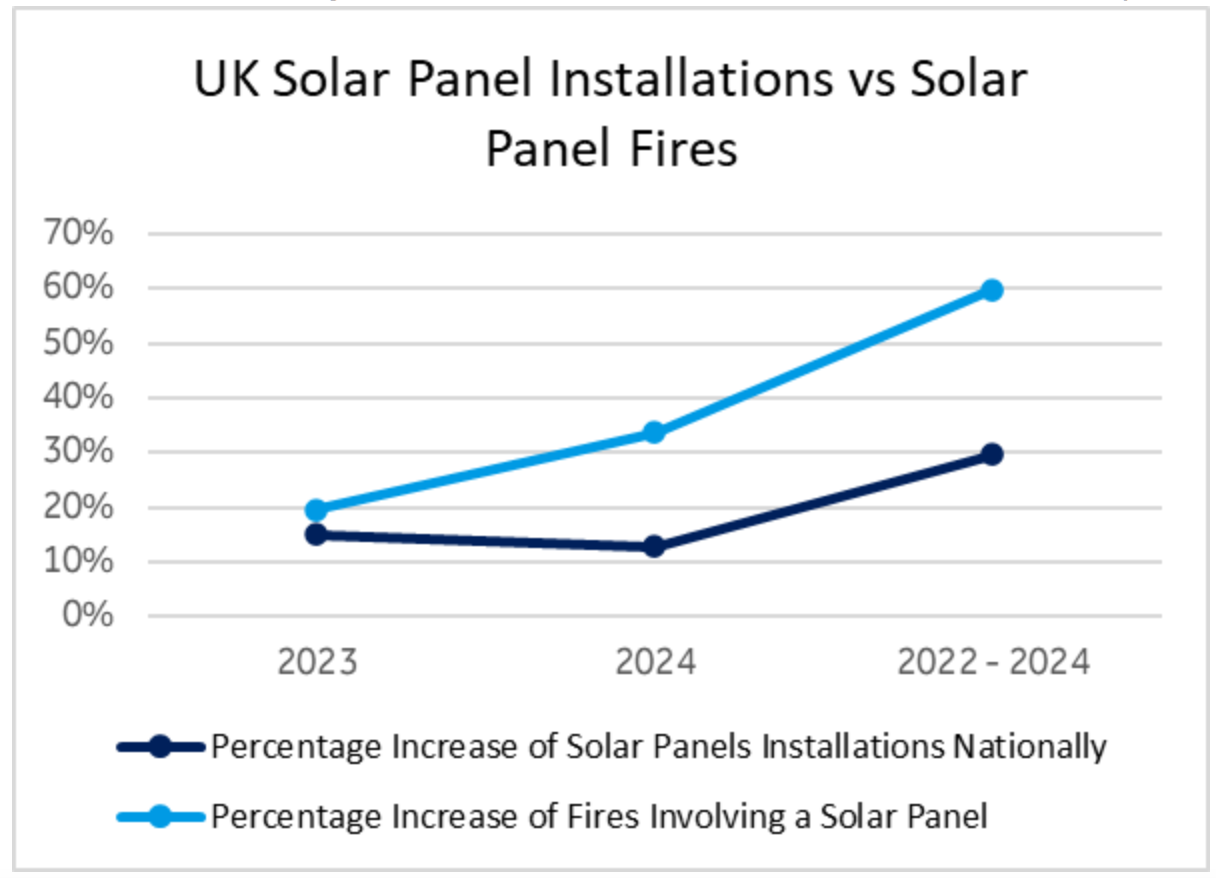
In other words, solar‑related fires remain low frequency, but low frequency does not mean low relevance. We have a growing installed base, two distinct peaks of installation activity (around 2010 and 2020), and a large proportion of systems now reaching the age where wear, environmental exposure and historic installation quality become more critical. As systems age, the risk of faults increases, particularly where maintenance has been minimal or ad hoc.
At the same time, wider UK fire statistics show a 33%increase in overall fires in England between 2024 and 2025, with average fire service response times increasing by roughly half a minute. More fire incidents, longer response times, and more complex roof structures is not a comfortable combination when dealing with an energised array on top of a combustible structure.
All of this suggests a familiar pattern: a currently small, but growing, risk that could crystallise into a more material issue for property portfolios over the next decade if left unmanaged.
Most solar energy‑related fires are not caused by the photovoltaic panels themselves. The panels, when correctly designed and installed, are robust. The bigger issues tend to lie in the surrounding infrastructure and the way systems interact with the building fabric.
The most common elements to fail are:
DC isolators and connectors. Poorly designed, installed or maintained DC isolators and connectors account for a large proportion of solar panel fires. Mismatched connectors, damaged components and poorly crimped terminations all increase the likelihood of failure.
Electrical arcing. Arcing occurs when current jumps across an air gap, effectively creating an arc flash that can ignite nearby materials. Loose debris, nesting materials and general detritus near DC cabling can raise the risk of ignition if an arc develops.
Installer error and limited capacity. Many incidents trace back to installation quality rather than inherent product defects. High demand for solar has not always been matched by a sufficient supply of experienced, accredited installers. Corners can be cut when the market overheats, whether deliberate or incompetence.
Combustible roof spaces and the “chimney effect”. Where panels sit above combustible roofs or are backed by combustible insulation, any ignition source becomes more dangerous. The gap between panel and roof can create a chimney effect, drawing air up and feeding flames. What starts as a localised event can escalate into a full roof fire much faster than in a conventional fire e.g. via cooking appliances.
The difference between the most common causes of fire (human error) and solar installation fires is not random. Many of the drivers of solar‑related fires are identifiable at thorough out the installations’ lifespan. This gives insurers and their partners an opportunity to influence outcomes through standards, incentives and product design, in much the same way as they are now doing with EOW.
One of the lessons from EOW is that insurers were often reacting to claims data rather than shaping behaviour ahead of time. By the time the scale of the problem was obvious, millions of homes had been built or refurbished with layouts and plumbing choices that made leaks harder to detect and more expensive to fix.
With solar, the industry has a second chance to apply those lessons earlier. Instead of waiting for a decade of loss data to accumulate, insurers can treat solar‑related fire as a known, emerging exposure and start acting accordingly.
A customer‑first approach does not simply exclude the risk or charge a blanket loading for any property with panels. It involves designing products, underwriting and pricing strategies that make it easier and more attractive for customers to install and maintain these systems properly.
Some of the steps are obvious analogues to the EOW response.Just as leak detection devices have become a feature in many home policies, insurers can build propositions around solar safety:
The above is an echo of the industry’s origins in fire. Early insurers quite literally funded and operated their own fire brigades to protect their books. Today’s equivalent is not owning fire engines, but investing in the ecosystem: contributing to training for installers, supporting MCS and similar schemes, and engaging with fire services to ensure they understand the specific challenges of solar systems.
Pricing and product structures are powerful tools. Just as insurers have long offered discounts for burglar alarms or specific security measures, rating structures can be tuned to reward robust solar safety.
Examples include:
Evidence‑based discounts. Offering more competitive premiums where the homeowner can demonstrate that their system uses non‑combustible insulation, incorporates micro‑inverters (reducing high DC voltages on the roof), includes Arc Fault Circuit Interrupters (AFCIs), and has been installed and maintained by accredited providers.
Bundled maintenance and inspections. Building regular maintenance into the insurance offering. For example, annual infrared thermographic inspections to identify hot spots before they become faults, or bird‑proofing to prevent pest damage to DC cabling. In many cases, the cost of such services is modest compared to the potential reduction in claim frequency and severity.
Service‑led propositions. Positioning the insurer as a partner that helps homeowners manage their solar investment, rather than simply a payer of last resort. Many customers will pay a premium for services that remove hassle, including dealing with multiple trades or navigating technical issues.
The goal is to shift the relationship from reactive claim settlement to proactive risk management. By setting clear criteria for enhanced terms and making those criteria achievable for most customers, insurers can support the growth of green technology without compromising underwriting discipline.
When a property with solar panels does catch fire, the claim is often more complex than a traditional roof fire. Firefighters face additional electrocution hazards and may be limited in how they can safely ventilate or access the roof, which can increase smoke and structural damage. Specialised extinguishing agents, safe isolation and removal of panels, and the reinstatement of the solar system all add cost.
Pricing and reserving frameworks can (and arguably should)recognise these factors now. External benchmarks and emerging data are already available to help pricing teams model the likely severity uplift for solar‑related fire claims. Waiting for loss triangles to “prove” the issue risks a repeat of the EOW experience, where required price adjustments lagged behind the actual risk for years.
The industry was caught on the back foot by the gradual rise of EOW. What started as a trickle of claims became a persistent, systemic issue that has taken years of work, and significant investment, to bring under better control.
With solar‑related fire, insurers have the opportunity to move earlier. The frequency is currently low, but the direction of travel is clear enough to justify action. Underwriting, pricing and product teams can evolve propositions that both support customers in adopting green technology and nudge the market towards safer design, installation and maintenance.
Insurers do not need to become de facto fire safety officers. They do need to use the levers they already understand; capital, data, underwriting and distribution, to reward better practice and manage emerging risk. If they do, the industry can help deliver on its own ESG commitments, support the energy transition and avoid turning solar into the next avoidable drag on property results.
Building Research Establishment (BRE) / Department for Business, Energy & Industrial Strategy (BEIS): Fire incidents involving solar panels / PV systems. Major government-commissioned investigation highlighting DC isolators and installer error as primary causes of PV fires.
London Fire Brigade (LFB) Incident Reports: Solarpanel fire - Lewisham (August 2024. https://www.london-fire.gov.uk/incidents/2024/august/solar-panel-fire-lewisham
Fire Industry Association (FIA) / News Reports: Wembley IKEA Solar Incident (October 2025). Coverage of the commercial incident requiring LFB deployment to extinguish approximately 100 rooftop solar panels. https://elec.training/news/solar-safety-alert-what-the-wembley-ikea-fire-tells-us-about-installation-standards/
QBE: Press release (Nov ’25) “UK Fire services tackle a solar panel fire every two days” https://qbeeurope.com/news-and-events/press-releases/uk-fire-services-tackle-a-solar-panel-fire-every-two-days#_ftn2
AXA: Press release (Oct ’25) “AXA UK warns of solarpanel fire risk and issues customer guidance” https://www.axa.co.uk/newsroom/media-releases/2025/axa-uk-warns-of-solar-panel-fire-risk--and-issues-customer-guidance/